

The Raymond Group works with a range of specialty finish materials, including Glass Fiber-Reinforced Gypsum (GFRG), Glass Fiber-Reinforced Concrete (GFRC), and Fiber-Reinforced Plastic (FRP). These materials are often used to create detailed architectural features and complex shapes that would be difficult to achieve with traditional methods.
From design coordination through installation, these systems require careful planning, precise layout, and close collaboration between project teams.
Case Study: Mingei International Museum
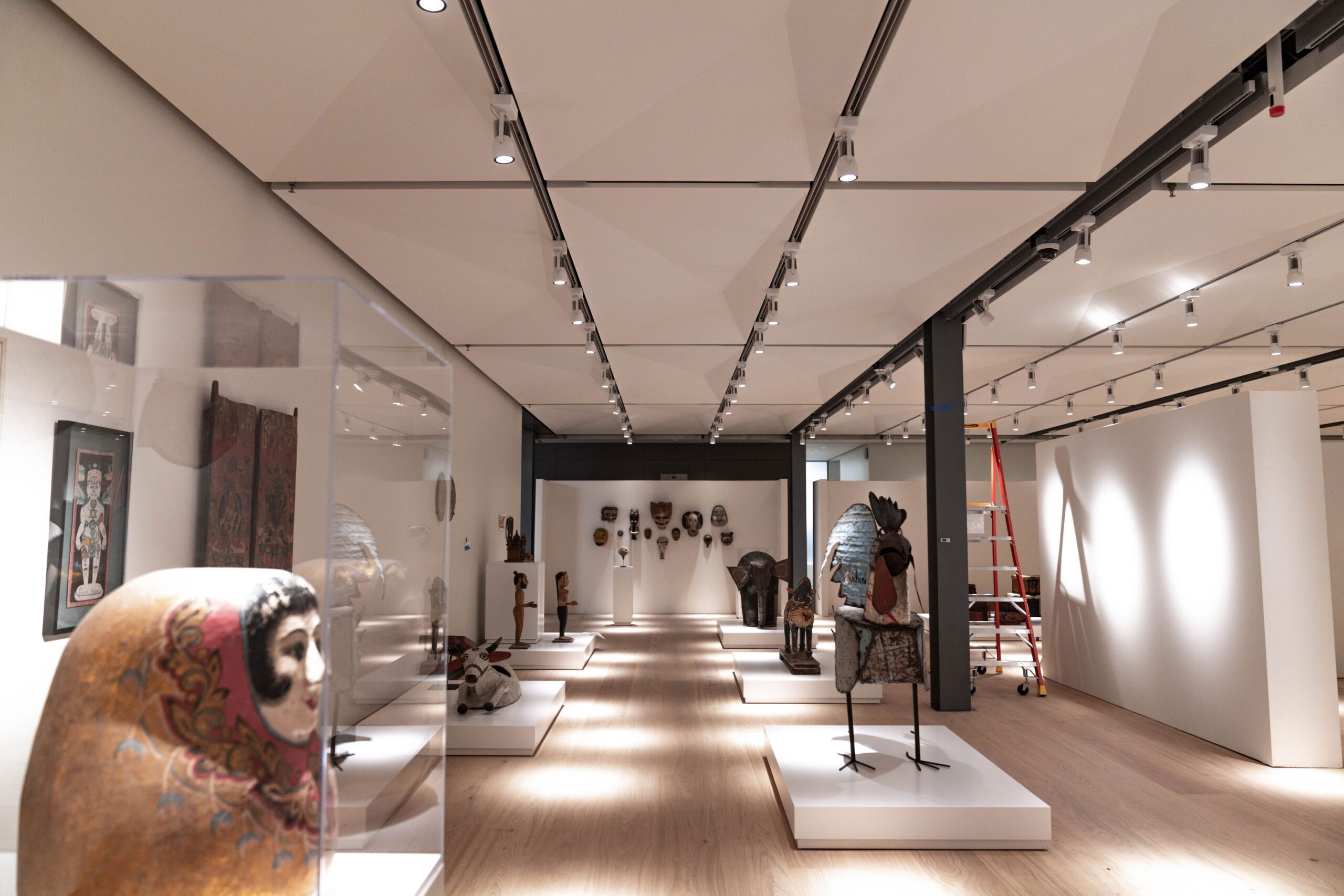
The Mingei International Museum in Balboa Park completed a renovation and expansion, adding more than 50,000 square feet of updated space for exhibitions and programming.
Working with Layton Construction, Raymond’s scope included metal framing, drywall, and several specialty finish systems such as cement board wall panels, GFRG ceiling panels, and metal and fabric ceiling systems.
Project Highlights
- Custom Wall Panels
The project included 230 cement board wall panels, each individually designed and fabricated with specific cutouts to accommodate building elements. - GFRG Ceiling Installation
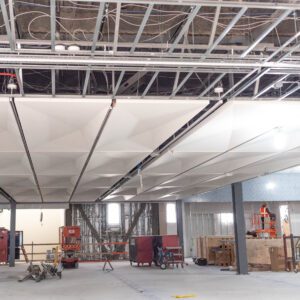
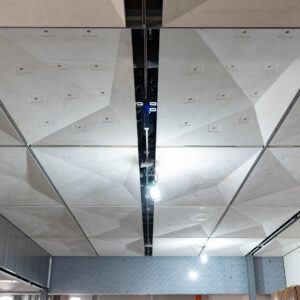
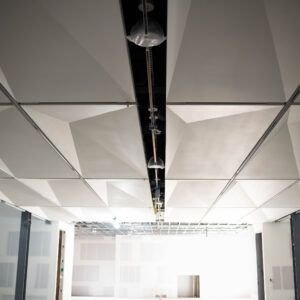
A total of 100 GFRG ceiling panels, each over 13 feet in length, were installed in varying widths. The layout required consistent spacing and alignment across the system. - Coordination of Structural Systems
The Unistrut support system and GFRG panels were designed together to work within the constraints of the existing structure and overhead systems. Additional support points were incorporated to allow for more flexibility during installation. - Perforated Metal Ceilings
Metal ceiling panels with continuous perforation patterns were installed across long spans, requiring careful alignment to maintain a consistent visual effect. - Integration of Multiple Ceiling Systems
GFRG, metal, fabric, and other ceiling elements were installed together, requiring coordination across trades to ensure alignment and fit.

Project Approach
One of the primary challenges was integrating new materials and systems into an existing structure. This required a detailed shop drawing process and close coordination between teams to align layout, support systems, and clearances.